
Study Visit to Rzeszów and Przemyśl

10 04 2026
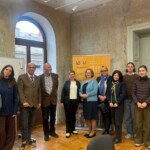
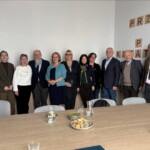
On 10 April 2026, the fourth study visit took place as part of the Political System in Action project. During the visit, the participants had the opportunity to meet with two experts, Jan Rokita and Jan Bartmiński, who shared their knowledge and experience regarding the functioning of the state and constitutional transformation.
Meeting with Jan Rokita
In Rzeszów, the research team met with Jan Rokita, a former politician who was actively involved in the process of Poland’s constitutional transformation after 1989. In the 1990s, Jan Rokita co-developed the concept of government reforms, including strengthening the role of the Prime Minister and improving the mechanisms of state governance.
The expert discussed the model of the state that emerged as a result of the constitutional transformation, as well as the history of local government reforms and the current condition of local self-government.
Referring to the constitutional changes initiated by the Round Table negotiations, Jan Rokita pointed out that there had been little reflection at the time on how to build the state itself. He emphasised that the primary objective of the transformation was to regain sovereignty rather than to consciously build a modern system of governance. The only exception, in his view, was the reform of the judiciary, which, according to the speaker, resulted in the creation of a corporatist model based on the strong autonomy of the judicial community. In the expert’s assessment, this had long-term negative consequences for the functioning of the entire system.
The expert devoted particular attention to the structural problems of the state, especially those concerning the executive branch. He noted that after the fall of communism and the abandonment of the leading role of the communist party, which had functioned as the “head” of the entire state apparatus, Poland inherited a system lacking the capacity for strategic governance. The state faced three fundamental challenges: determining who was responsible for setting policy directions, defining the organisational structure of the government, and deciding who should manage it. Jan Rokita described the system operating at that time as chaotic and fragmented, pointing to the existence of numerous parallel administrative structures (“a loose confederation of ministries”), which weakened the coherence of state action.
In his presentation, the expert focused primarily on the reforms carried out between 1995 and 1999, which aimed to strengthen the position of the Prime Minister and rationalise the structure of the government. These reforms introduced, among other things, mechanisms for coordinating the work of the Council of Ministers and a system of preparing government decisions within ministerial committees in order to ensure greater consistency in decision-making. Jan Rokita regarded the Act on Departments of Government Administration as an important step towards better coordination of state activities because it organised sectoral statutory arrangements. He noted, however, that attempts to provide the administration with genuine strategic functions encountered strong resistance and often resulted only in formal changes.
Jan Rokita also referred to the discrepancy between the practical functioning of the government and the constitutional provisions, particularly regarding the competences of the Prime Minister and ministers. He pointed to the continuing limitations of the state’s ability to pursue coordinated public policies and the lack of an effective system for evaluating government activities. The expert also shared his own practical experience in this area, which the participants regarded as a particularly valuable part of the discussion.
The reform of local self-government constituted the second topic presented by Jan Rokita. He explained that the underlying objective of the reform had been to decentralise the system of governance by transferring state responsibilities to the local level. He emphasised that local government reform had been the key constitutional reform because strong local self-government forms the foundation of an effective state. According to the speaker, however, the model based on the coexistence of central government administration and local self-government at the regional level has never been fully implemented in practice and remains a source of tensions to this day.
The expert also discussed problems affecting the functioning of local self-government, including the excessive number of municipalities (gminas) and changing public attitudes towards decentralisation. He noted that during the 1990s local self-government was perceived primarily in terms of liberation, which meant that the reform was not regarded as an institutional reconstruction of the state, even though this was in fact precisely what it represented. Jan Rokita observed that it was now possible to speak of the degeneration of local self-government, associated with the weakening of public oversight over its quality and performance. In his opinion, an additional problem today is the weakening of local self-government by European policies, which have shifted away from distributing funds through the regions towards allocation through national governments.
Both the Polish and Ukrainian participants agreed that there is currently growing support for more centralised solutions, even though decentralisation may contribute to more effective governance.
Finally, the discussion addressed contemporary attempts to overcome the limitations of the system. The expert referred to examples of informal governance mechanisms employed primarily by Prime Ministers in recent years, which, although operationally effective, may weaken the formal structures of the state. Strong political polarisation, he argued, eliminated both mechanisms of accountability: public oversight and governmental control. There was no institution responsible for creating state policy, no analytical apparatus, including no systematic evaluation of the effectiveness of public policies.
Meeting with an Expert in Przemyśl
The second meeting during the study visit took place in Przemyśl. It was devoted to the local government reform of the 1990s and its significance for the functioning of the state. The research team met with Jan Bartmiński, an expert in public administration and local self-government, a former long-serving member and Chair of the Przemyśl City Council, a former member of the regional assembly (sejmik), and the last Voivode of Przemyśl before the 1998 local government reform.
The expert emphasised that the local government reform, which entered into force at the beginning of 1999, was in fact part of the broader process of rebuilding the Polish state after 1989. Territorial self-government constituted one of its fundamental elements, although the concept of “self-government” had already existed in Poland earlier, especially in the 1980s in connection with the Solidarity movement, when it referred primarily to professional self-government rather than territorial self-government.
In the next part of the meeting, the expert also discussed earlier administrative arrangements, including the system of 49 voivodeships introduced in 1975. In his opinion, this system resulted in excessive administrative fragmentation and hindered the effective governance of the state, including budgetary planning. Jan Bartmiński also referred to the difficulties involved in developing a concept of local self-government during the period of transformation, including during the Round Table negotiations, where no common understanding of the concept existed and the government side was reluctant to transfer real authority to the local level.
An important topic was the origin of the three-tier administrative division of the state into municipalities (gminas), districts (powiats), and voivodeships. Jan Bartmiński observed that the creation of larger regions resulted not only from Poland’s internal needs but also from the process of European integration. In this context, particular attention was devoted to the importance of regional cooperation and the establishment of cross-border initiatives such as the Carpathian Euroregion, which became a platform for cooperation among Poland, Ukraine, Slovakia, and Hungary.
The expert pointed out that the development of international cooperation required sufficiently strong administrative units. This was one of the arguments in favour of reducing the number of voivodeships and creating a smaller number of larger administrative units. At the time, this process was the subject of intensive debate, during which concerns were raised about the possible emergence of separatist tendencies. The speaker noted that various options, ranging from eight to twelve regions, had been considered and that the final shape of the reform resulted from political compromise.
In conclusion, the study visit to Rzeszów and Przemyśl provided a better understanding of both the historical background of institutional reforms and their contemporary consequences, including the tensions between centralisation and decentralisation and the challenges associated with coordinating public policies. The meetings demonstrated that both Poland and Ukraine face similar challenges concerning the effectiveness of public institutions and the transparency of their functioning.